
Introduction: Why Lined Pipes Are Critical for Industrial Operations
In industries like mining, chemical processing, and power generation, pipelines transporting abrasive slurries (ore, coal, chemicals) or corrosive fluids face rapid degradation. Lined pipes—featuring internal linings of ceramic, silicon carbide (SiC), or polymer—solve this by combining a steel shell’s structural strength with a lining’s extreme wear/corrosion resistance. These pipes extend service life by 5–15x vs. bare steel, reducing downtime and maintenance costs.
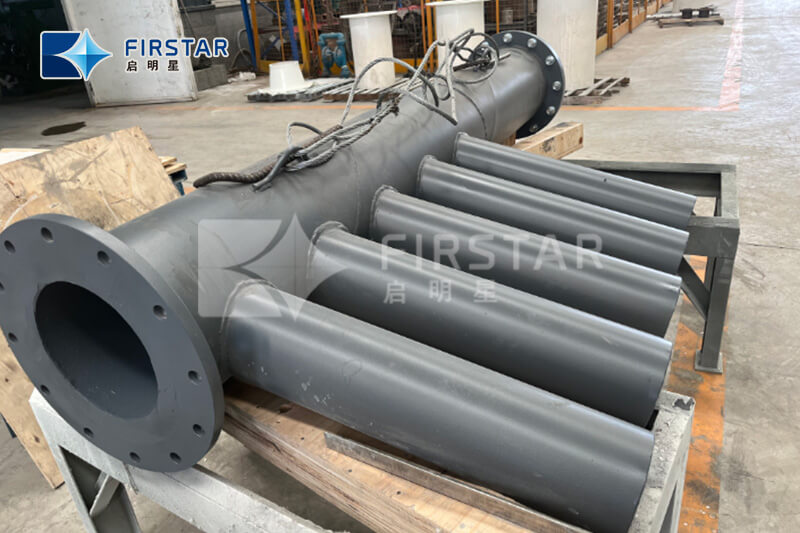
Types of Lined Pipes & Core Materials
Lining Type | Material Composition | Key Properties | Ideal Applications |
|---|---|---|---|
Ceramic Lined | 92–99% Al₂O₃ (alumina) | Mohs 9 hardness, 1500°C thermal stability | Mining slurry, cement raw meal |
SiC Lined | Reaction-bonded SiC (RBSiC) | 2500 HV hardness, 1600°C resistance | Molten metal, acid slurries |
Polymer Lined | UHMWPE, PTFE | Low friction (μ=0.05), pH 1–14 corrosion resistance | Food processing, wastewater |
Technical Advantages of Lined Pipes
1. Superior Abrasion Resistance
Ceramic Linings: Wear rate ≤0.08 cm³/10k cycles (ASTM G65), 10x lower than steel.
SiC Linings: Withstand 500+ ton impacts (e.g., 300mm iron ore lumps) without cracking.
2. Extreme Corrosion Protection
Alumina Ceramic: Resists acids (pH 2–12), alkalis (NaOH), and molten salts.
PTFE Lining: Non-reactive with organic solvents (e.g., benzene, acetone).
3. Extended Service Life
Mining slurry pipes: Lifespan increases from 6 months (steel) to 5+ years (ceramic-lined).
Chemical transfer pipes: SiC linings prevent pitting in sulfuric acid (98% concentration).
Industrial Applications of Lined Pipes
Mining & Mineral Processing
Slurry Transport: Ceramic-lined pipes move iron ore/concentrate slurries (60% solids) with <2mm/year wear.
Tailings Lines: SiC linings resist abrasive silica particles in tailings disposal.
Chemical & Petrochemical
Acid/Alkali Transfer: PTFE-lined pipes handle 50% NaOH and 30% HCl without corrosion.
Reactor Feed Lines: Alumina linings prevent catalyst contamination in ethylene production.
Power Generation
Coal Ash Slurry: Ceramic-lined pipes reduce wear in ash handling systems (pH 8–10).
Flue Gas Desulfurization (FGD): SiC linings resist gypsum slurry erosion.
Case Study: Ceramic-Lined Pipes in a Chilean Copper Mine
Challenge: Bare steel pipes for copper concentrate slurry (60% solids) failed every 8 months, costing $1.2M/year in replacements.
Solution: Installed 92% alumina ceramic-lined pipes (DN300, 5mm lining thickness).
Results:
Lifespan: Extended to 6 years (9x improvement).
Downtime Reduction: Saved 1,200 hours/year in maintenance.
Cost Savings: $980k/year via reduced liner changes and energy efficiency (smoother flow).
Installation & Maintenance Best Practices
Lining Process: Use hot-isostatic pressing (HIP) for ceramic linings to ensure 95%+ adhesion to steel.
Joint Design: Flanged connections with ceramic gaskets prevent leakage.
Inspection: Annual ultrasonic testing (UT) to detect lining thinning (>20% requires repair).
Conclusion
Lined pipes are indispensable for industries requiring reliable fluid transfer in harsh environments. By selecting the right lining material (ceramic for abrasion, SiC for extreme heat, polymer for corrosion), operators achieve unmatched durability and cost efficiency. From mining slurry to chemical processing, lined pipes redefine pipeline performance.